
 Understand the business model
Solar Cleaning Academy
Build a professional solar cleaning business.
A practical learning platform for solar cleaning entrepreneurs: market opportunity, safety, pricing, customer acquisition, content systems and equipment decisions.
 Understand the business model
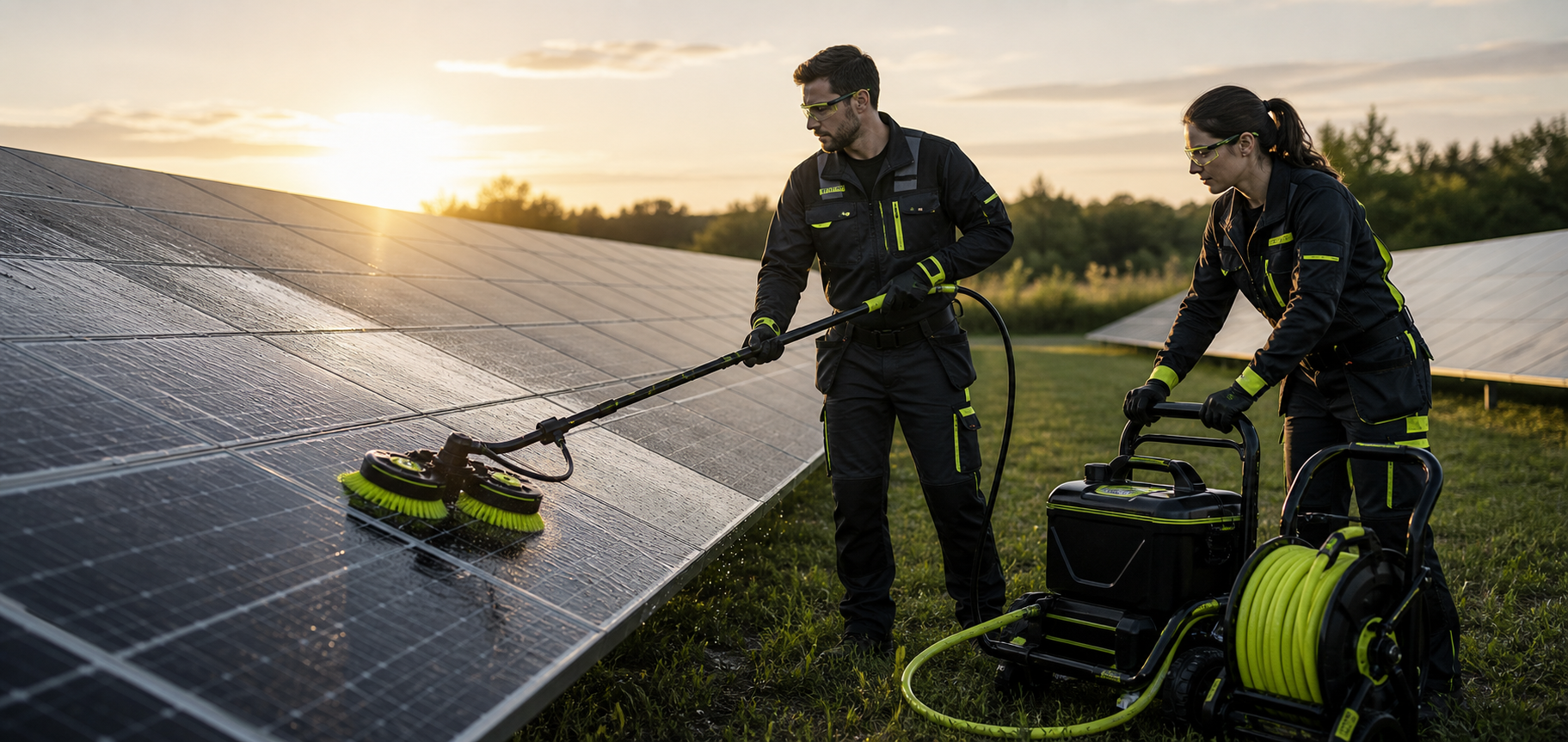 Work professionally
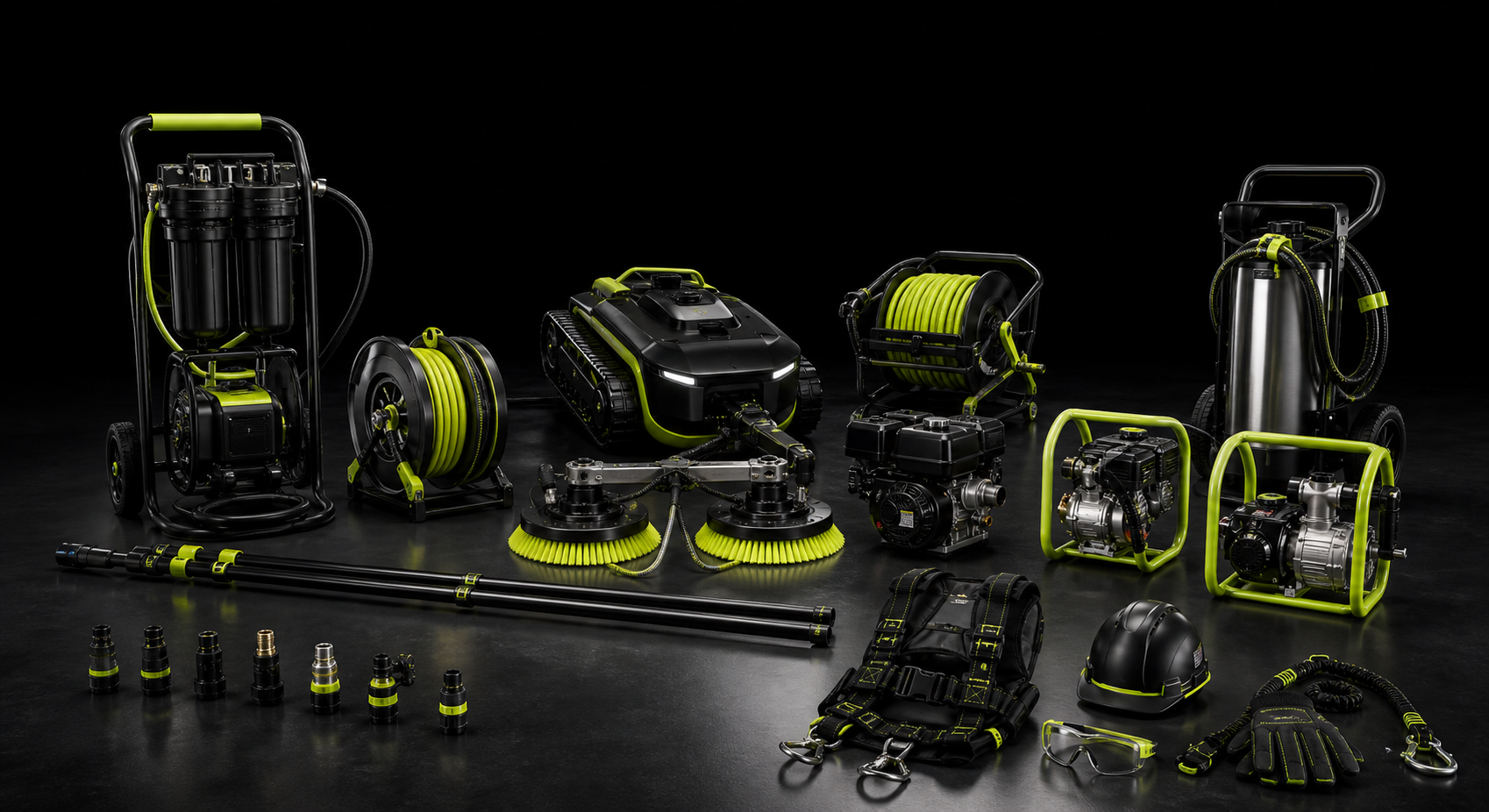 Choose the right equipment
Market opportunity
Why solar cleaning is an exciting local service market
Photovoltaic installations continue to grow, and systems need ongoing care. This creates a practical service opportunity for people who want to build a focused local business.
Growing market
More solar installations mean more panels that need regular cleaning and care.
Recurring demand
Many residential and commercial customers need repeat service during the year.
Professional service
Customers value operators who take equipment, safety and presentation seriously.
Growth path
How operators can build higher monthly revenue step by step
Growth usually comes from better pricing, regular customers, local partnerships and simple marketing systems. The Academy explains the path without promising results.
Individual jobsStart lean and test local demand.Regular customersTurn one job into seasonal maintenance.Commercial jobsServe larger sites with clear systems.Team operationsScale with training, safety and repeatable processes.
Safety awareness
Professional work begins with safe decisions.
Solar cleaning may involve water, electricity, slippery surfaces, ladders, roofs and customer property. The Academy builds safety awareness so new operators think professionally from day one.
PPE and fall protection Electrical hazards Water and roof risks Regulations and insurance
Academy curriculum
10 practical modules
Module 1Why solar cleaningRead lesson
Photovoltaic systems are installed on homes, farms, industrial buildings, parking areas and commercial properties. Many owners plan installation carefully but only consider ongoing care later.
- Dust, pollen, industrial deposits, leaves and bird droppings can visibly soil a system and reduce its professional appearance.
- Owners often need a service provider who understands panels, water management, access, safety and ongoing care.
- The opportunity is local, practical and service-oriented: educate customers, inspect the site, quote transparently and work professionally.
Your first task is to understand the market and explain maintenance needs responsibly, before selling equipment.
Module 2Safety & fall protectionRead lesson
Safety comes before revenue. Solar cleaning may involve heights, slippery surfaces, heat, delicate materials and other people's property. Professional operators make risk assessment part of every job.
- Do not access roofs without training, permission, suitable equipment and a safe work plan.
- Use PPE, harnesses, inspected anchor points, safety lines and fall protection when required by the site or the law.
- Avoid wet or slippery roofs, strong winds, thunderstorms, unsafe ladders and unclear access routes.
- If a job requires skills you do not have, work with qualified professionals or decline it.
Before every quote, create a simple safety checklist: access, height, surface, weather, electrical hazards, PPE, insurance and emergency plan.
Module 3Water & electricityRead lesson
Solar panels can generate electricity when exposed to light. Water near cables, connectors, inverters or damaged panels can be dangerous if handled carelessly.
- Never spray electrical boxes, inverters, exposed cables, damaged connectors or cracked panels.
- Stop work if you see burn marks, loose wiring, broken glass, unusual smells or visible electrical damage.
- Ask about the system layout and access before starting, especially at commercial sites.
- Follow manufacturer instructions, local regulations and qualified electrical safety advice.
Your role is safe cleaning, not diagnosing or repairing electrical systems. If in doubt, stop and refer the customer to qualified professionals.
Module 4Equipment basicsRead lesson
A practical starting setup should be simple, easy to understand and suited to the target job. More equipment does not automatically mean a better business.
- Core components may include a dual-head rotary brush, telescopic pole, power supply, extension cable, water hose and connection accessories.
- You also need PPE, gloves, slip-resistant footwear, eye protection and site-specific safety equipment.
- Professional presentation matters: clean tools, organised cables, a tidy setup and clear communication build trust.
- Do not advertise components that are not included. Communicate only what is actually supplied or offered.
Start with a clear core setup, learn the process, then expand when real jobs require specialised tools.
Module 5Pricing jobsRead lesson
Pricing is not a fixed standard figure. A fair quote depends on panel count, access, travel, site type, soiling, safety requirements and realistic working time.
- Residential jobs are often simpler but can quickly become complex when roof access is unsafe.
- Commercial jobs may involve more panels, recurring contracts, access coordination and higher documentation standards.
- Example only: 10 small jobs x €150 = €1,500 potential revenue. Four larger jobs x €500 = €2,000 potential revenue.
- There is no income guarantee. Results depend on demand, price, skills, marketing, safety and implementation.
Create a quotation template with panel count, access notes, scope of work, exclusions, price, validity and safety assumptions.
Module 6Winning your first customersRead lesson
First customers usually come from direct local outreach, clear evidence and simple education. Do not wait for perfect branding before talking to the market.
- Use Google Maps to find solar installers, farms, industrial buildings, property managers, cleaning companies and local businesses with visible panels.
- Send a short message explaining who you are, the problem you solve, why cleaning matters and how to request a quote.
- Use local Facebook and business groups carefully. Inform first, avoid spam and provide a clear route to the Academy or an enquiry.
- Record every lead: contact, location, panel type, message sent, follow-up date and outcome.
Create a list of 50 local contacts and approach 10 each day with a helpful, unobtrusive message.
Module 7Quoting & closingRead lesson
A professional quote reduces misunderstandings. Before giving a price, gather enough information to understand the site and its risks.
- Ask for photos, approximate panel count, region, roof or ground access, level of soiling and known system problems.
- Explain clearly what is included and excluded. Do not promise electrical repairs, performance guarantees or unsafe access.
- Offer one-off cleaning or recurring maintenance depending on the site.
- Follow up politely and briefly after 24 to 48 hours.
Use a clear quotation structure: problem, site notes, scope, safety information, price, maintenance option and next step.
Module 8Before-and-after videosRead lesson
Short visual evidence makes the service easier to understand. Aim for transformation and education, without exaggerated advertising.
- Film dirty panels, the cleaning process and the results from safe positions.
- Use captions explaining what viewers see: dirt, bird droppings, pollen, a safe process and a clean result.
- Get permission before filming customer property, addresses, faces or private areas.
- Keep videos short, clear and local. Real evidence can be more effective than a perfect advertisement.
Create three repeatable video formats: a close-up of a dirty panel, the cleaning process and the clean result with a brief explanation.
Module 9TikTok & Reels lead systemRead lesson
Social media should bring people into your funnel, beyond collecting views. Every post needs a clear next step.
- Publish short educational videos about market opportunities, safety awareness, pricing examples and equipment setups.
- Use multiple languages if you target different countries, but keep every video simple and direct.
- Ask viewers to comment with a keyword or visit the Academy before buying equipment.
- Avoid unrealistic income promises. Use responsible language: examples, potential, results vary, safety first.
Publish one short video daily for 30 days and track which topics generate comments, messages and enquiries.
Module 10Recurring revenueRead lesson
Strong service businesses grow through systems and relationships, beyond individual jobs. Solar cleaning can become recurring when customers understand ongoing maintenance needs.
- Offer seasonal cleaning plans for homes, farms and commercial sites where regular cleaning makes sense.
- Ask satisfied customers for referrals, reviews and permission to use before-and-after material.
- Build partnerships with solar installers, maintenance companies, property managers and local cleaning businesses.
- Scaling comes from consistent service, safe processes, local trust, follow-up and recurring customer relationships.
Offer the next maintenance appointment immediately after each job. Make the next step easy for the customer.
Business calculator
Solar cleaning revenue calculator
Estimate potential monthly revenue before planning equipment, pricing and marketing.
Estimated monthly revenue2,000 €
This is an example calculator only. Results depend on location, pricing, demand, experience and marketing. No revenue or profit is promised.
View Academy modulesMarketing strategy
Marketing support Locked
Included in selected equipment and business packages.
- Flyer templates
- Canva templates
- Facebook post templates
- Quotation templates
- Pricing templates
- Customer scripts
- WhatsApp templates
- Email templates
Equipment section
The Academy explains the business. The catalogue helps you choose the right systems.
Once visitors understand the market, equipment selection follows the job type: brush systems, robots, pure water, pumps, cleaning agents, pressure units, electric or diesel water pumps and PPE.
Electric brushes Cleaning robots RO/DI pure water Safety equipment
Practical resources
Turn the lessons into a concrete action plan.
Site checklist
Use before quoting: access, panel count, roof or ground mounting, water source, electrical hazards and safety notes.
Pricing worksheet
Estimate working time, travel, cleaning effort, equipment costs, maintenance frequency and minimum price.
Customer outreach scripts
Short messages for solar installers, farms, industrial buildings, property managers and local businesses.
Safety decision tree
Helps beginners decide when a job should be declined, referred or planned with additional PPE.
Before-and-after content plan
A practical system for Reels, TikTok and local evidence without unrealistic income promises.
Maintenance plan for regular customers
A template for turning a single cleaning job into seasonal reminders and follow-up offers.
FAQ
Frequently asked questions
Is this an income guarantee?
No. This is training and planning support. Results depend on pricing, implementation, demand, location and marketing.
Do I need to buy equipment before using the Academy?
No. The Solar Cleaning Academy helps you understand the market opportunity, risks and business model before selecting equipment.
Does it cover safety?
Yes. The Academy builds safety awareness but does not replace local regulations, professional training, insurance or qualified specialists.